تحقيقات

It was not bruises that marked her face that night.
Maryam (a pseudonym) opened the door to her sister, wiping away traces of tears she had tried to hide with cold water. The house was tidy. The smell of coffee drifted from the kitchen. Children were watching television in the next room. Everything looked normal except for her voice as she repeated:
Nothing happened… just a misunderstanding. He got angry for a bit, then calmed down.
Behind this short sentence hide years of repeated beatings, insults, smashing objects in front of her, and a constant threat: If you tell anyone, I swear you’ll never see the kids… and I know exactly how to make you regret it.
Every time Maryam thinks about going to the police station, she hears her mother’s voice in her head:
My daughter, these are things between you and him. Don’t expose your household’s secrets to people… the scandal isn’t only yours, the scandal is for the whole family.
This is how violence in many homes turns into a heavy family secret socially redefined as a marital issue or a man’s temper,” rather than a crime that requires state intervention.
A widespread phenomenon hidden behind silence.
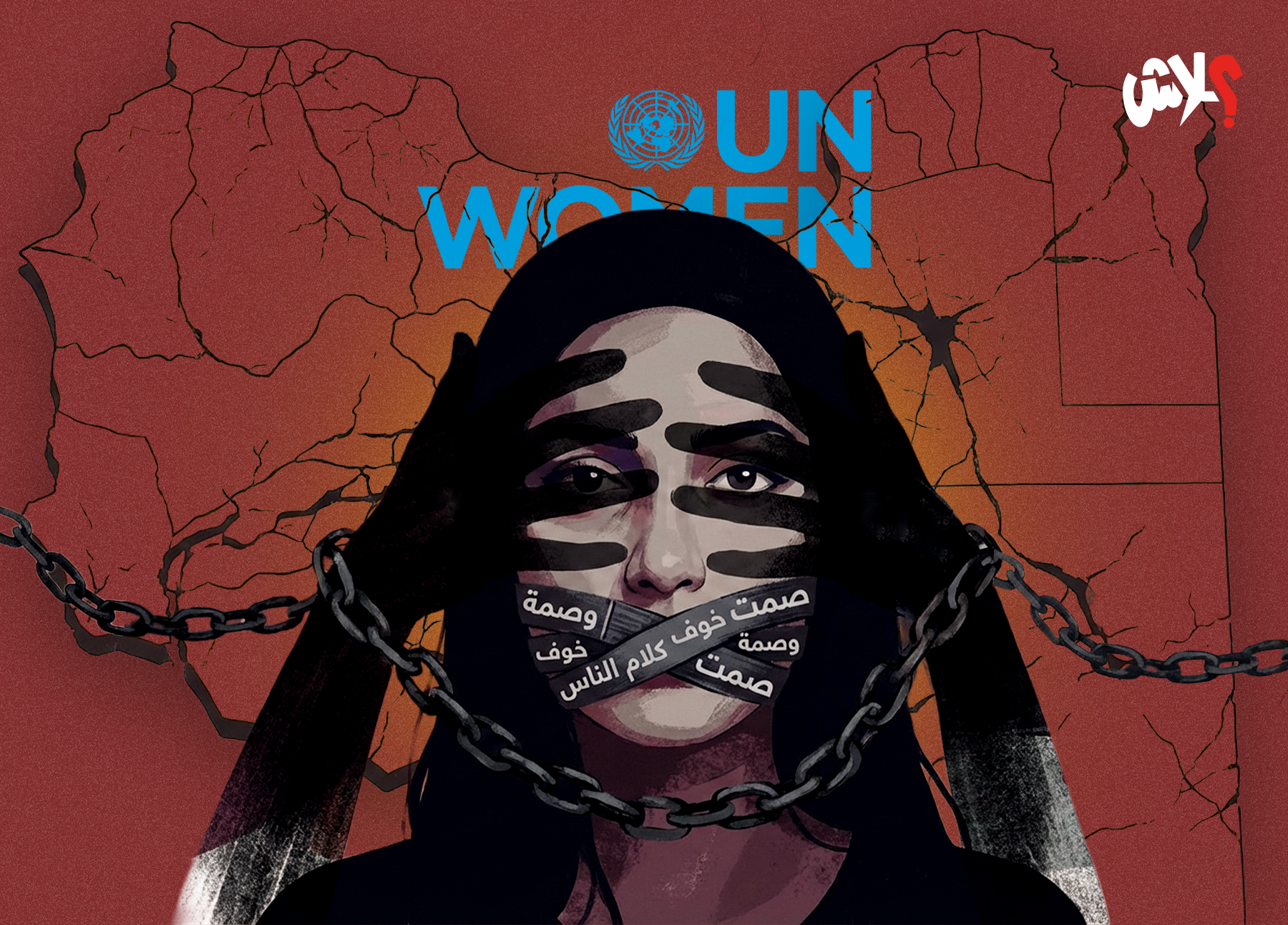
A study by UN Women on the economic and social impact of conflict on women in Libya indicates that domestic violence is considered a difficult topic in Libyan society, and that concepts of honor and reputation make speaking about it highly sensitive pushing many women to rely on their families instead of resorting to official institutions.
A joint report submitted to the Human Rights Council within the framework of the Universal Periodic Review (UPR) goes further, describing sexual and gender-based violence, including domestic violence, as widespread, yet largely underreported, due to the stigma attached to it, fear of retaliation, and the absence of clear and safe pathways for reporting and support.
A British policy report (CPIN) on the situation of women in Libya also confirms that gender-based violence is considered widespread, yet downplayed and undocumented, as there is no reliable data on the number of affected women amid a partial collapse of the rule of law and deteriorating security conditions.
This picture is repeated in testimonies from women we contacted in the west, east, and south, but most asked that their names and cities be concealed not only out of fear of the perpetrator, but above all because of people’s talk.
This is a family matter when violence becomes part of upbringing.
In another home, in other corners of the country, two sisters Souad and Huda (pseudonyms) share their experience of family violence:
I was born into the screams of my brothers older than me. I had to be that obedient sister who exists in this life to carry out her brothers’ orders, fulfill their demands without fatigue, exhaustion, or complaint, and endure insults and beating whenever I spoke of any of my rights as a human being. I could not complete my education or work, and I do not have the right to live a normal life like other women in this society. I cannot speak about what weighs on my heart. My mother cannot protect me from my brother’s beating, and my sister and I cannot leave the house even with my mother and father. We cannot buy what we want, and we do not even have the right to make decisions. My father could not protect me despite trying. All forms of violence in our home are part of our upbringing, as my brothers tell us, and even my mother: (Your brother wants what’s best for you).
She says what hurt her most was not the beating itself, but the family’s reaction:
Every time we go out with my mother and father just to breathe some air from God, I return home in fear and leave home in fear. We can’t step out unless we make sure our brothers aren’t home because if we come back and find one of them inside, the world collapses on my head and on my mother’s and father’s. Going out with our parents is forbidden unless they give permission. And if we go out and find one of them at home, my sister and I get beaten. I can’t defend myself, my mother can’t defend me, and even my father can’t protect me from them. The beating itself doesn’t hurt more than my family’s reaction. And the strange thing is: if I try to speak about what we’re going through outside the house, they say I’m worthless and unfit, they blame me, and they say beating is the foundation of upbringing that we are only raised properly when we are beaten.
This social logic resonates in international reports. The UPR indicates that the concept of family honor plays a decisive role in silencing many victims of sexual and domestic violence, and that fear of stigma and social exclusion prevents women from reporting or even seeking legal or psychological counseling.
In another assessment on Gender and COVID-19 in Libya conducted in 2020, it was documented that women rarely reported domestic violence, harassment, or verbal abuse, and that many people around them did not encourage reporting rather, they viewed silence as the best option to preserve the family.
In this sense, the home transforms from a space that is supposed to provide safety into an arena governed by power balances within the family: who controls the money, who controls the weapon, and who controls “reputation” as an additional weapon.
Her sister says:
I tried to escape from home more than once, but I hesitated a lot because I carry the family honor, and society is merciless they don’t know what we endure in humiliation, beating, and torture.
Escaping home and searching for shelter and protection.
Many abused women are forced to flee their families due to the violence they face, turning to the streets in search of independence and survival trying to save themselves from the pain of torture and misery that follows them morning and night, and from the torment of self and conscience that never falls silent, reminding them through every scar of the chaos and emotional shock they carry.
Some flee on their own in search of safety so they can rebuild their lives. Others flee from the (oppression) of the family only to fall into far greater and they wrong themselves by throwing their bodies into the arms of militias at times, or into prostitution at other times.
Sadly, this group of women is exploited by those who lack conscience, honor, integrity, and faith. They are forced into prostitution, their circumstances exploited, and they are trafficked in illegal activities just to secure food, drink, and clothing.
Some also reach what we all know: pressure breeds explosion. The psychological, nervous, emotional, and social pressure endured by abused women can create an intense drive toward deviation, as a result of extreme pressure. In the age of technology, it has become easy to travel anywhere while still in one’s room. When these women leave their homes and step into the outside world, they may develop a desire to live in a deviant way as a form of revenge against themselves and their families.
An absent law, and a responsibility that does not reach the threshold of the home.
On the legislative level, a recent memorandum by Amnesty International submitted to the Committee on the Elimination of Discrimination against Women (CEDAW) in 2024 states that Libya lacks specific legislation on violence against women and girls, including domestic violence. It notes that a draft law to combat violence against women was proposed in 2017 with support from the UN Mission in Libya (UNSMIL) and other UN agencies, but has not been adopted to this day.
A joint report by Libyan and international organizations for the UPR clarifies that domestic violence is punishable only in very limited cases, such as when a wife suffers injuries requiring hospitalization. It also indicates that some articles of the Penal Code grant mitigation of punishment in so-called honor crimes.
Within this context, lawyer Masarra Al-Sadiq Al-Doukali confirms that the legislative framework in Libya still fails to deal with domestic violence against women and children, despite intense discussions and reform attempts.
She explains that the efforts of civil society organizations and legal activists produced a draft law to combat domestic violence that has been ready since 2023, but the House of Representatives has neither published it in the official gazette nor adopted it making it, to this day, merely ink on paper that does not rise to the level of law and cannot be enforced.
Al-Doukali adds that two specialized courts for combating violence against women and children were established in Tripoli and Benghazi with UN support, yet their work faces major challenges most importantly the absence of a dedicated domestic violence law. This forces judges to apply the general Penal Code, an old law that does not reflect the nature of these crimes or the developments of social reality.
She notes that Article 398 of the Penal Code is the main text currently relied upon, but it provides no real protection: it merely punishes anyone who mistreats a family member or a child under fourteen with imprisonment of up to three years rising to six years if serious harm results, and to prison if the act leads to death.
She believes these penalties are not deterrent enough, and that the vague wording of a family member opens the door to broad interpretations. She also points out that the legal logic makes the penalty for killing a family member lighter than killing a stranger an irony she considers to weaken deterrence and encourage further violence.
She highlights the danger of treating these crimes as complaint-based offenses, where the public prosecution cannot initiate a case except upon the victim’s own complaint, while many victims are isolated inside the home, under direct threat, or afraid of social stigma if they file a complaint against a husband, father, or brother. The only exception is murder, due to the victim’s death and inability to submit a complaint.
Al-Doukali concludes that addressing domestic violence cannot be done through general texts in the Penal Code. It requires a comprehensive, dedicated law that aligns with Islamic Sharia and social norms, sets deterrent penalties, and establishes integrated protection mechanisms including: shelters, complaint hotlines, psychological and social support, and legal awareness programs for women and children.
Shelters are few and far from most survivors.
Facing this reality, some humanitarian programs attempt to fill part of the gap. The United Nations Population Fund (UNFPA) says it has established several safe spaces for women and girls in the east, west, and south, providing psychological and social support and awareness on gender-based violence, along with skills training. It reports that more than 13,000 women and girls benefited from these services in 2020 alone.
But these efforts, as acknowledged in UNFPA’s own evaluation in Libya, remain limited compared to the size of need both in geographic coverage and capacity.
The same reports indicate that survivors of violence face difficulty identifying where to report, or accessing legal and psychological support services especially in rural and marginalized communities.
On the other hand, what is known as the Social House, affiliated with the Ministry of Social Affairs and intended to serve as a shelter for abused women, does not fulfill its role at all in this field. We attempted to contact the director to understand the reasons behind her inability to provide services for domestic violence cases, but she refused to engage with us.
However, our investigation found that one of the reasons for establishing the Social House was to accommodate women subjected to domestic violence, to serve as their refuge, in application of the legal principle: (society is the guardian of those who have no guardian). Yet, due to certain pressure exerted on the administration of the Social House on the claim that it (empowers women against their families) it has refused to admit women exposed to domestic violence unless there is a court ruling or an official order from the public prosecutor referring the case.
We obtained this information from a source close to the Social House, who insisted on anonymity due to the sensitivity of the subject (as the source stated).
In short, the available protection resembles a small lifeboat in a vast sea reaching some survivors while remaining far from many others.
And the path does not stop at the shelter’s doorstep. Even reaching the police is a heavy step.
An assessment report on gender in Libya notes that women before the COVID-19 pandemic rarely reported domestic violence, and that even when reporting occurs, authorities do not usually take immediate action to protect them reinforcing a lack of trust in institutions.
A 2025 report by international human rights organizations submitted to UN mechanisms confirms that gender-based violence in Libya, including domestic violence, is largely underreported due to social stigma and lack of trust in institutions, and that authorities systematically fail to prosecute and hold domestic abusers accountable.
.png)
Within this investigation, social specialist and psychologist Yousra Ammar Bin Zayed explains that the most dangerous psychological effect of domestic violence against girls is the loss of a sense of safety. The family supposed to be the primary source of safety becomes a source of fear and threat in such cases, leaving the girl unable to feel safe anywhere outside the home. This chronic fear places her permanently between two options: escape or confrontation.
In the case of escape, a girl may leave the home in different ways some socially acceptable, others rejected. She may engage in long working hours or multiple jobs to distance herself from the suffocating household environment. It may even reach the point of leaving the family or traveling outside the country. This behavior, says Bin Zayed, often leads to the breakdown of family and social bonds.
In the case of confrontation, the girl enters a state of constant fighting. Her reactions to ordinary situations become exaggerated because internally she lives under continuous threat. This negatively affects her relationships with classmates, friends, and coworkers, and makes her unable to build stable relationships due to the absence of inner safety.
Bin Zayed stresses that the effects of violence do not stop at the present, but extend into the future. A girl who never felt safe within her family will find it difficult to build a stable marriage or establish a balanced family. Sometimes marriage becomes a means to escape the family home, only for her to later discover that she has moved from a broken family into another unstable one because she has never known what family safety truly means.
She warns that the accumulation of such cases reflects on society as a whole: unstable families produce a fragile society because the home, which should be the first station of safety, turns into an environment of fear and conflict. She concludes by emphasizing that recovery requires awareness and serious psychological work by the victim herself, so she can learn to become a source of safety for herself and for her children in the future otherwise, the cycle of violence will continue to be inherited across generations.
A faint voice of resistance exists, nevertheless.
Still, the scene is not entirely dark. In recent years, small networks of local organizations and feminist initiatives have emerged, trying to change the unwritten rules.
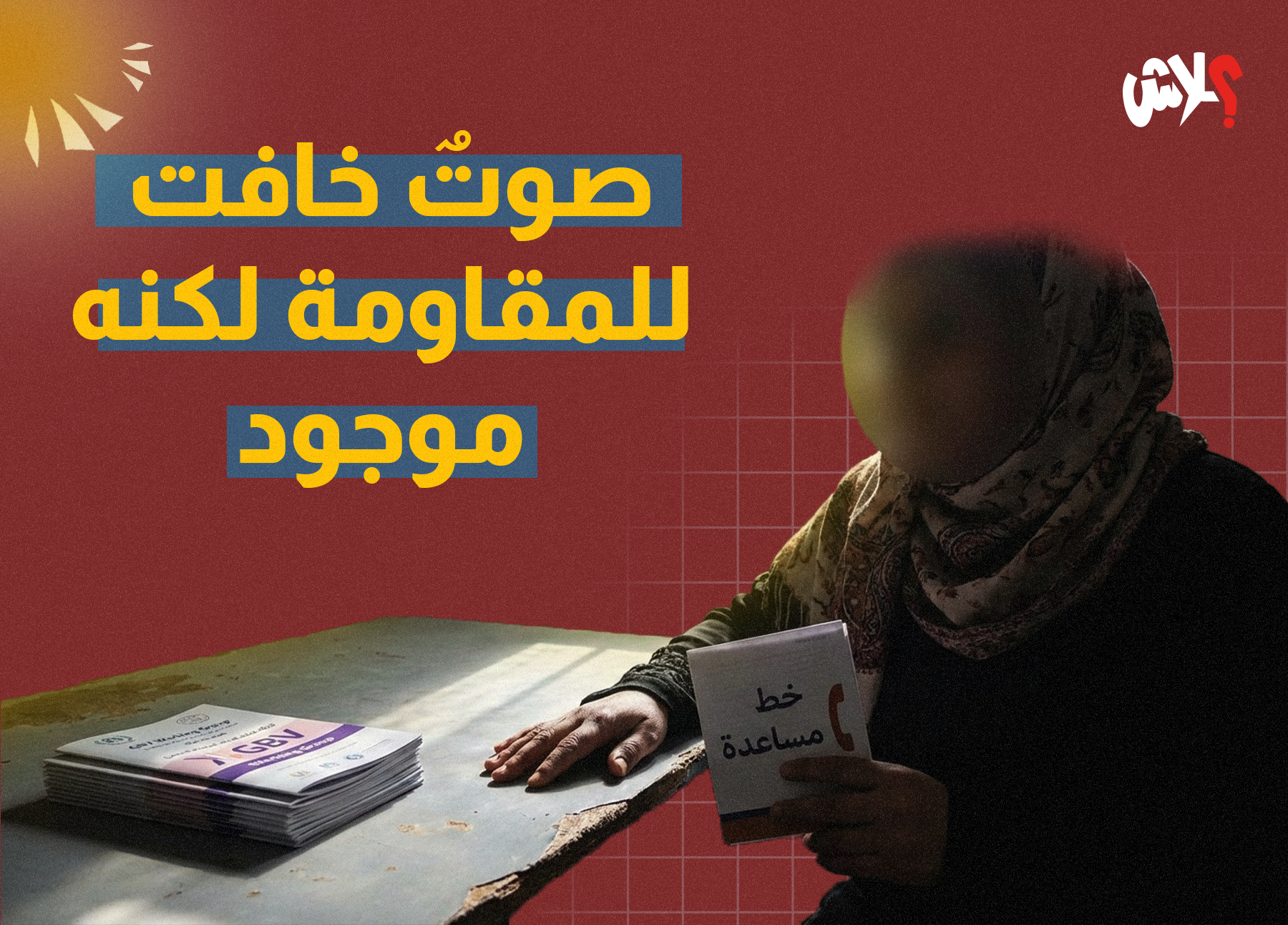
The Gender-Based Violence Working Group (GBV Working Group) in Libya a humanitarian coordination platform bringing together UN agencies and local and international organizations regularly publishes awareness materials and professional guidelines, and works to improve referral procedures between health, legal, and social actors for survivors.
International reports acknowledge that these organizations often operate in a complex security and political environment, where activists and women human rights defenders in Libya have faced threats and smear campaigns forcing many to scale back their work or operate out of the spotlight.
But the mere existence of a helpline, a safe space, or a lawyer willing to listen and provide guidance gives some women a different starting point than the phrase: There is no solution except patience.
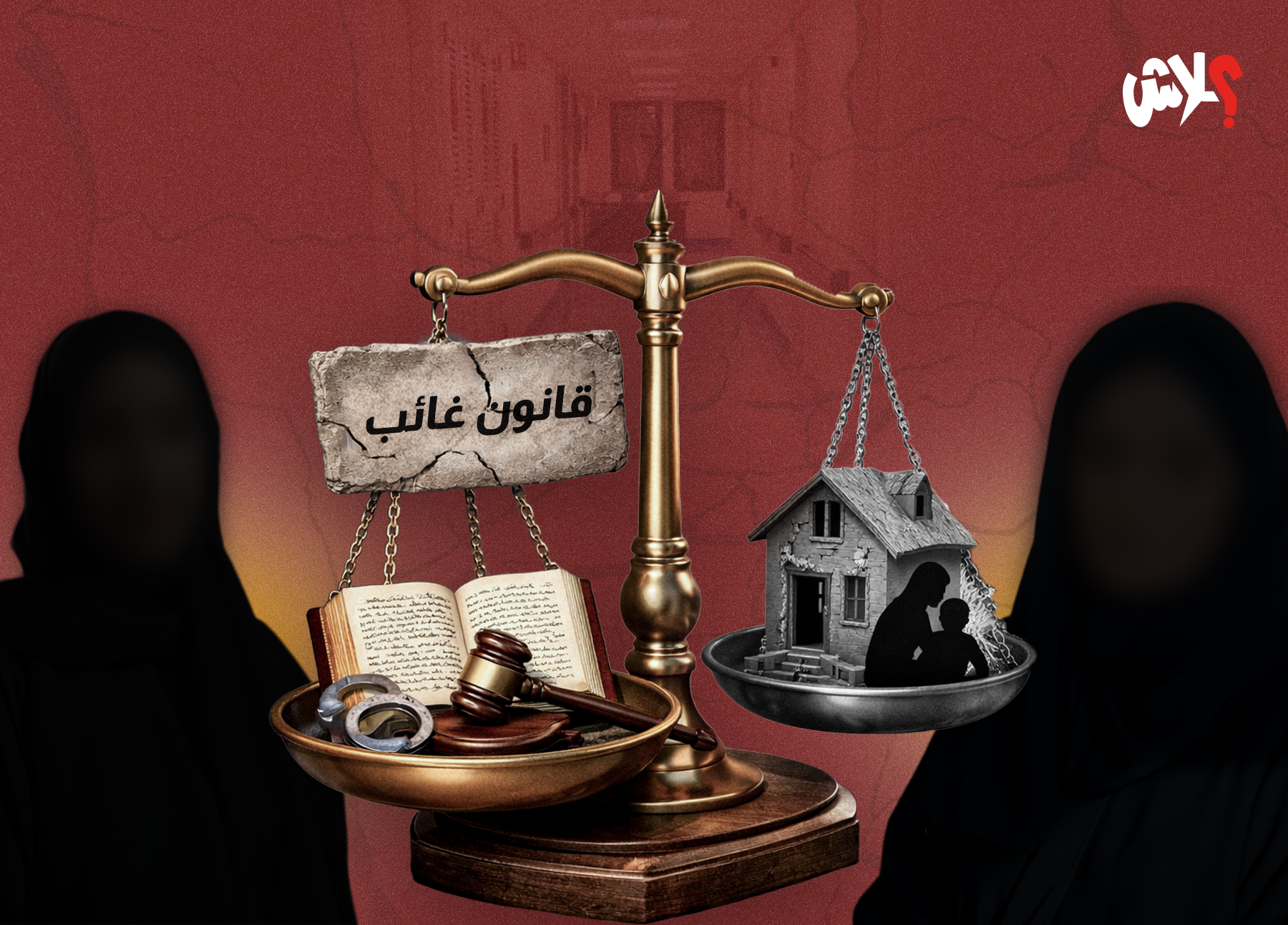
The stories we cited are not isolated cases, but models of violence concealed through the complicity of three interlinked factors:
A social culture that redefines violence as part of upbringing or a man’s masculinity, placing family reputation above the victim’s safety.
A legal and legislative vacuum that lacks a domestic violence law, while keeping provisions that reduce penalties in honor crimes, grant rapists an exit through marriage to the victim, and ignore marital rape.
A weak protection system: limited and distant shelters, confusing reporting pathways, slow police and judicial response, and a shortage of trained personnel in dealing with survivors.
Between the first slap excused as a slip, and the last threat delivered under the muzzle of a gun in a crowded home, a widening gap of silence grows unseen by others, yet leaving profound psychological and physical scars on entire generations.
Turning this violence from a family matter into a public concern requires not only new legislation, but a change in how the home itself is perceived: from a closed space governed by unquestioned authority, to a place that like any other space falls under the rule of law and the right of every human being, man or woman, to a life free of violence.
المصادر
المراجع الرئيسية المستخدمة في التحقيق
• تقرير هيئة الأمم المتحدة للمرأة:
The Economic and Social Impact of Conflict on Libyan Women
• التقرير المشترك للاستعراض الدوري الشامل (UPR) – ليبيا، الدورة الثالثة
• مذكرة العفو الدولية إلى لجنة سيداو حول ليبيا (2024)
• برنامج العنف القائم على النوع الاجتماعي – صندوق الأمم المتحدة للسكان في ليبيا
• تقييم «الجندر وكوفيد-19 في ليبيا»
• تقرير سياسات عن أوضاع النساء في ليبيا (CPIN)
• بلاغ من منظمات حقوقية إلى آليات الأمم المتحدة حول العنف القائم على النوع الاجتماعي في ليبيا (2025)
• صفحة مجموعة عمل العنف القائم على النوع الاجتماعي في ليبيا (GBV Working Group)