
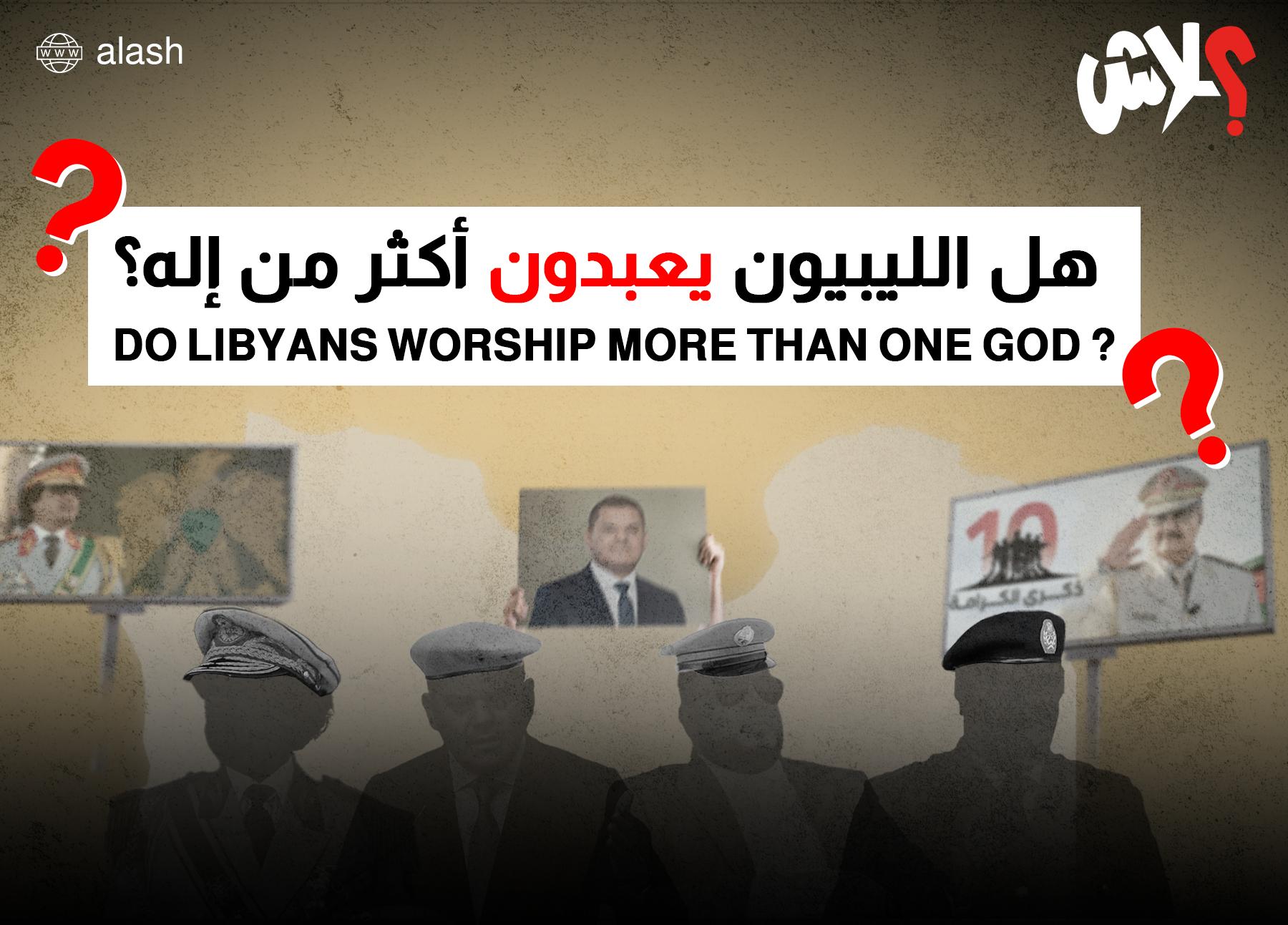
Do Libyans Worship More Than One God?
Before it was known as Libya, this land stretching between Cyrenaica, Tripolitania, and Fezzan was inhabited by peoples of Amazigh origin mixed later with Phoenicians, Greeks, and Romans. In those eras, the idea of god was not separate from the idea of leader or protector, but was its direct reflection.
Early Libyans as inscriptions and Greek writings indicate worshipped gods that represented force, domination, and protection more than creation or mercy.
Libyan Amun, whose worship first took a local form before Egyptians later adopted him as “Amun-Ra.” In Siwa and Garama, Amun was depicted as a man with horns, symbolizing strength and fertility, and priests delivered prophecies to rulers and kings even Alexander the Great came from Macedonia to be crowned “son of Amun” in the Siwa temple seeking divine legitimacy to rule North Africa.
Thus, the Libyan forged a deity that granted legitimacy to the ruler turning the “worshipped” into a seal that sanctifies authority.
Even when Carthage expanded westward, Phoenicians brought gods like Baal Hammon and Tanit, whose symbols blended with local beliefs Baal Hammon was a god of power and fire, and Tanit a symbol of fertility and loyalty to the land.
But notably, Libyans in coastal cities did not worship them purely they reshaped them in local human form, with statues bearing Libyan features and tribal marks, as if the god reflected the worshipper rather than the opposite.
Even when the Greeks founded Cyrene (Shahat) and its Pentapolis, they did not eliminate local gods but merged them Libyan Amun became Zeus-Amun, and Tanit became a Libyan Athena.
Here, the idea of “deifying humans” began to appear clearly; the great leader or ruler was granted divine traits, and a shrine was built for him after his death or even during his life (a shrine or a Rajma dome) reviving symbolically the notion that “authority is not complete unless it touches the sky.”
When the Prophetic message reached this land, it attempted to plant the idea that servitude belongs to God alone, and that humans even prophets are described by the Qur’an as mortal, flawed, and prone to error, so they would never be turned into gods.
And it seems this is common among humanity but Libya, uniquely, tends to Libyanize gods as we noted before, and we see that now in our modern age despite humanity arriving at systems that separate rulers from heaven, holding them accountable, judging them, and removing them when they wrong.
I know well this is self-evident, but as we always say, we live in the era of self-evident truths, because this pattern has repeated itself over the past thousand years on this land people turning rulers into gods, dying for them, killing for them, attaching themselves to them in a strange relationship that suggests a genetic defect in the inhabitants of this land.
In just the past hundred years, Libyans have deified more than one person surrendering everything to them, submitting completely. This does not apply only to national rulers even locally, in unstable historical phases. It does not matter their capability, wisdom, or intellect only their ability to use violence against people whenever and however they want, sharing that trait with the imagined deity and that is enough for people to kneel.
For example, Muammar al-Dhawi in Warshafana and this is just an example, not exclusive you find everyone offering symbolic sacrifices so Muammar may be pleased with them from municipal candidacies to medical treatment, even marriage proposals! Everyone seeks blessing and approval a scene not far from Libyans offering offerings to deities they crafted with their own hands. And this applies from Hay al-Andalus to Rajma and down to the Niger border a cluster of gods differing in scale, dominance, reach, and number of believers.
And to sustain this profession of god-making on this land, there is a class constantly promoting the notion that the fall or attempt to eliminate any god means heavenly wrath and collapse of stability. And although people’s lives are not worthy of dogs and cats in 2025 on the other side of the Mediterranean, yet inhabitants here fall again into this suggestion by the god-makers.
Perhaps it is due to the chaos lived after every god’s collapse, due to a collective failure to build a system that allows them to live free. Even when history gave them chances to establish such a system, they rejected it and hurried back to the god-sellers demanding a new god and the cycle continues.
Understanding this deeply gives us the ability to think of a solution one that frees people from themselves first reminding them there is only one God, humans are humans, and all rituals practiced daily prayer, zakat, moral obedience are rooted in the principle that no human is a god, no matter what “miracle, development, or money” he shows.
So to all unbelievers like me in human-made gods I tell you:
The road is long, many will fall into the sweet trap of servitude so arm yourselves with conviction, and pray for steadfastness for your poor speaker.