
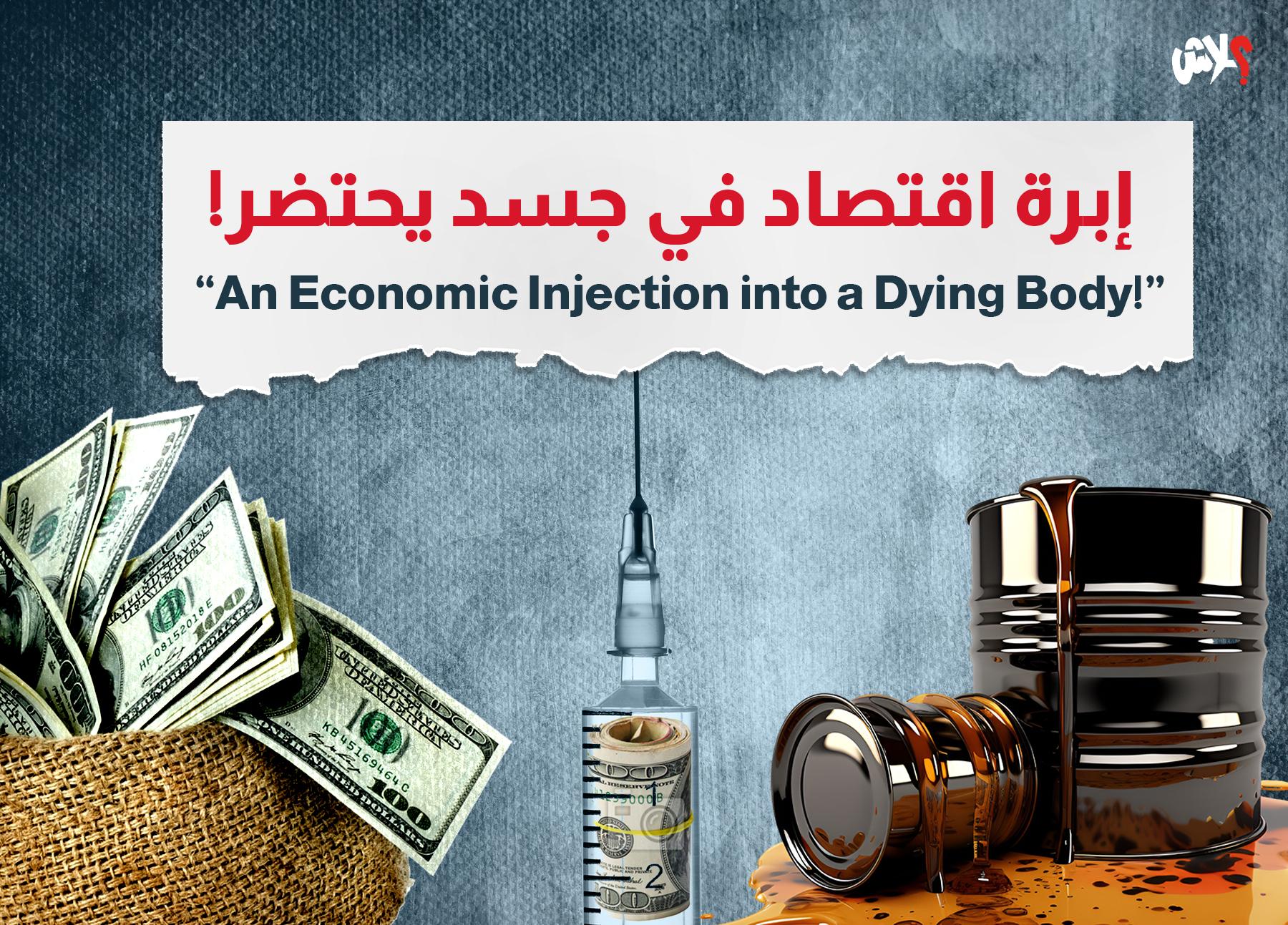
A Dose of Economics in a Dying Body
Just days ago, Libya’s Prime Minister Abdulhamid Dbeibah reopened the long-buried file of lifting fuel subsidies during an economic conference held in Tripoli. In his opening remarks, Dbeibah proposed three alternative mechanisms for fuel support:
direct cash transfers to citizens, salary increases, or allocating a subsidized fuel quota to each citizen through electronic cards.
Dbeibah added:
“We are not afraid. This is Libyans’ money, and it must be used in a serious and proper way for the benefit of this people. There is fuel and oil smuggling, and electricity is consumed without accountability. The solutions are very clear: either we provide direct cash support to citizens, inject it through salaries, or give each citizen a quota of subsidized fuel via a card and the rest should be sold at its real price like any other country.”
Although discussing state economic policies is a luxury Libyans do not truly possess partly because these files are managed chaotically with no clear lines or coherent plans to debate, and partly because the public reacts to life-changing decisions with emotion and polarization the debate resurfaces anyway.
In Libya, a decision is “right even if it impoverishes me” if made by my political camp, and “wrong even if it enriches me” if made by the opposing one.
Despite this, the issue of lifting fuel subsidies always returns like an unwelcome guest that ruins a gathering that wasn’t cheerful to begin with. Governments present the idea with confident rhetoric: “Reform is a necessity.” But citizens who have watched such “necessities” mutate into nightmares brace themselves and wonder:
What kind of reform begins by emptying our pockets before filling them?
Talk of ending fuel subsidies is not new, but today it is gaining momentum under the familiar pretext of “saving the national economy” that magic phrase often used to justify performing surgery without anesthesia. A state exhausted by corruption and conflict now wants to fix its financial hemorrhage by cutting fuel spending, as if it suddenly realized its coffers are not bottomless after decades of treating public wealth as an endless well, except when it comes to funding essential services.
The government’s primary justification is “combatting fuel smuggling,” a plague that has transformed Libya into a charitable fueling station for neighboring countries. Every liter of subsidized gasoline is sold on the black market for less than the price of bottled water, while the state treasury absorbs annual losses worth billions of dollars.
But one wonders:
Why wasn’t smuggling a priority when corruption was devouring billions in broad daylight?
Why wasn’t it a priority when the state’s coffers were overflowing and untouched by today’s depletion?
Why did combating smuggling become an “urgent necessity” only when it began threatening the survival of the two governments feeding on the last drops of a cow that is barely able to stay alive?
Other justifications extend beyond smuggling such as “social justice.” In reality, the wealthy benefit far more from subsidized fuel than the poor, especially when owners of luxury cars fill their tanks cheaply while ordinary citizens struggle to afford transport fares.
But the irony remains undeniable:
A state incapable of building a fair tax system or providing electricity and water now wants to prove it can achieve justice by pulling the rug from under everyone hoping the poor will later catch whatever crumbs fall to them through “smart transfers in a country of remarkable stupidity.”
Such systems have never succeeded anywhere without a strong digital infrastructure something Libya painfully lacks.
No reasonable person denies that directing funds toward health, education, and infrastructure is a noble idea especially in a country where schools resemble ruins and hospitals function as waiting rooms for death. But citizens who have been fed countless promises of improved services from Gaddafi’s Libya of Tomorrow to today’s Reconstruction and Return of Life slogans know exactly what “development” means in government language: a new sign on a crumbling building, or medical equipment “distributed” to rural clinics only to vanish into corrupt warehouses.
As for the prerequisites for lifting subsidies such as public transport reform and price control they resemble a student asking his teacher how to study for tomorrow’s exam despite having never opened a book all year.
A country with no functioning transportation network between its cities let alone within its cities is expected to transform overnight into a model of transparency and organization?
What governments refuse to admit is that true reform does not begin by striking the poor under the pretext of saving them.
Real reform begins by striking the corrupt who turned the state into a spoils system.
Had every billion lost to smuggling and corruption been spent on building schools or hospitals, Libyans wouldn’t need to debate fuel subsidies at all.
But economic “surgery” is easy when performed on the pockets of ordinary citizens and becomes impossible when it touches the interests of the major market players.
In the end, lifting subsidies may indeed be necessary but it resembles trying to extinguish a fire with oil.
It might work, but if handled carelessly, it may lead straight to disaster.
Any “reform” that is not accompanied by accountability for the corrupt, not preceded by building safety nets for the most vulnerable, and does not allow citizens to share in its benefits…
is nothing but a recipe for yet another corruption project one that appears merciful on the surface, but beneath it lies pure torment. A Dose of Economics in a Dying Body .
Just days ago, Libya’s Prime Minister Abdulhamid Dbeibah reopened the long-buried file of lifting fuel subsidies during an economic conference held in Tripoli. In his opening remarks, Dbeibah proposed three alternative mechanisms for fuel support:
direct cash transfers to citizens, salary increases, or allocating a subsidized fuel quota to each citizen through electronic cards.
Dbeibah added:
“We are not afraid. This is Libyans’ money, and it must be used in a serious and proper way for the benefit of this people. There is fuel and oil smuggling, and electricity is consumed without accountability. The solutions are very clear: either we provide direct cash support to citizens, inject it through salaries, or give each citizen a quota of subsidized fuel via a card and the rest should be sold at its real price like any other country.”
Although discussing state economic policies is a luxury Libyans do not truly possess partly because these files are managed chaotically with no clear lines or coherent plans to debate, and partly because the public reacts to life-changing decisions with emotion and polarization the debate resurfaces anyway.
In Libya, a decision is “right even if it impoverishes me” if made by my political camp, and “wrong even if it enriches me” if made by the opposing one.
Despite this, the issue of lifting fuel subsidies always returns like an unwelcome guest that ruins a gathering that wasn’t cheerful to begin with. Governments present the idea with confident rhetoric: “Reform is a necessity.” But citizens who have watched such “necessities” mutate into nightmares brace themselves and wonder:
What kind of reform begins by emptying our pockets before filling them?
Talk of ending fuel subsidies is not new, but today it is gaining momentum under the familiar pretext of “saving the national economy” that magic phrase often used to justify performing surgery without anesthesia. A state exhausted by corruption and conflict now wants to fix its financial hemorrhage by cutting fuel spending, as if it suddenly realized its coffers are not bottomless after decades of treating public wealth as an endless well, except when it comes to funding essential services.
The government’s primary justification is “combatting fuel smuggling,” a plague that has transformed Libya into a charitable fueling station for neighboring countries. Every liter of subsidized gasoline is sold on the black market for less than the price of bottled water, while the state treasury absorbs annual losses worth billions of dollars.
But one wonders:
Why wasn’t smuggling a priority when corruption was devouring billions in broad daylight?
Why wasn’t it a priority when the state’s coffers were overflowing and untouched by today’s depletion?
Why did combating smuggling become an “urgent necessity” only when it began threatening the survival of the two governments feeding on the last drops of a cow that is barely able to stay alive?
Other justifications extend beyond smuggling such as “social justice.” In reality, the wealthy benefit far more from subsidized fuel than the poor, especially when owners of luxury cars fill their tanks cheaply while ordinary citizens struggle to afford transport fares.
But the irony remains undeniable:
A state incapable of building a fair tax system or providing electricity and water now wants to prove it can achieve justice by pulling the rug from under everyone hoping the poor will later catch whatever crumbs fall to them through “smart transfers in a country of remarkable stupidity.”
Such systems have never succeeded anywhere without a strong digital infrastructure something Libya painfully lacks.
No reasonable person denies that directing funds toward health, education, and infrastructure is a noble idea especially in a country where schools resemble ruins and hospitals function as waiting rooms for death. But citizens who have been fed countless promises of improved services from Gaddafi’s Libya of Tomorrow to today’s Reconstruction and Return of Life slogans know exactly what “development” means in government language: a new sign on a crumbling building, or medical equipment “distributed” to rural clinics only to vanish into corrupt warehouses.
As for the prerequisites for lifting subsidies such as public transport reform and price control they resemble a student asking his teacher how to study for tomorrow’s exam despite having never opened a book all year.
A country with no functioning transportation network between its cities let alone within its cities is expected to transform overnight into a model of transparency and organization?
What governments refuse to admit is that true reform does not begin by striking the poor under the pretext of saving them.
Real reform begins by striking the corrupt who turned the state into a spoils system.
Had every billion lost to smuggling and corruption been spent on building schools or hospitals, Libyans wouldn’t need to debate fuel subsidies at all.
But economic “surgery” is easy when performed on the pockets of ordinary citizens and becomes impossible when it touches the interests of the major market players.
In the end, lifting subsidies may indeed be necessary but it resembles trying to extinguish a fire with oil.
It might work, but if handled carelessly, it may lead straight to disaster.
Any “reform” that is not accompanied by accountability for the corrupt, not preceded by building safety nets for the most vulnerable, and does not allow citizens to share in its benefits…
is nothing but a recipe for yet another corruption project one that appears merciful on the surface, but beneath it lies pure torment.