
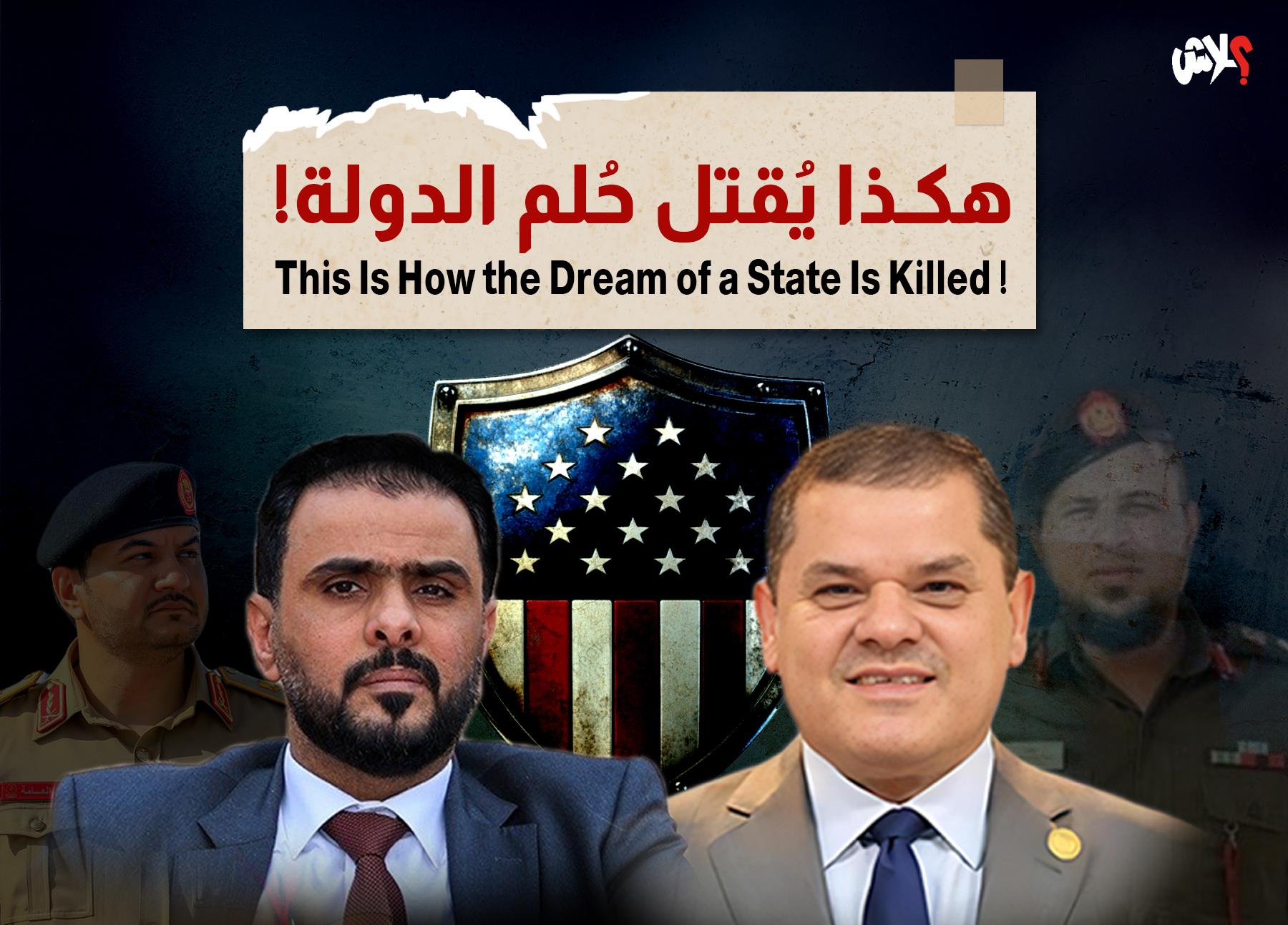
How a Nation’s Dream Is Killed
One of the most repeated demands voiced by Libyans across the country has been the establishment of a national military institution. This institution, however, has never experienced a normal or coherent phase since the 1969 coup led by Muammar Gaddafi. At the time, the army was still in its formative stage, but it received a fatal blow when it was dragged into the six-year war with Chad. The war ended, and with it ended the real nucleus of a national army capable of protecting the homeland and its people.
After that came the era of “security brigades” units loyal not to the state but to individuals and ruling families, widely accused of having only a symbolic attachment to Libya. This trajectory has brought us to where we stand today: armed groups spread across the country, wearing military uniforms and claiming national allegiance, while in reality they answer to specific men and families, fully prepared to kill you simply because you dared to object to the color of their commander’s uniform.
But let us leave aside this repetition every Libyan already knows it by heart. Instead, let us imagine the unthinkable: what if these groups actually united into a single military structure? What would the scene look like?
What fuels this hypothetical scenario is the growing talk about unifying military forces across Libya particularly those factions that maintain a minimum level of discipline and seek to distinguish themselves from others. According to this narrative, Mahmoud Hamza, several military figures from Misrata, and Saddam Khalifa Haftar could form a joint military council aimed at merging their forces. In their imagined version, the military institution would unite but such a union would hold no real meaning unless it ultimately resulted in taking power in Libya.
This proposition may indeed find traction in today’s chaotic reality. Libyans are exhausted by the security collapse and the endless political fragmentation. The idea also resonates with a segment of society that genuinely believes in the old saying: “They only move when the stick moves.” As such, a proposal of this kind may well gain at least superficially the blessing of several international actors who now see military rule as the only conceivable path to stability, after every other attempt has failed.
At the same time, a rising number of voices are interpreting the reported U.S. invitation extended to both Dbeibah and Hamad to visit Washington.
Though the invitation remains unofficial, several indicators give weight to this narrative particularly the fact that the Central Bank Governor was the one pushing for this meeting and announced that Hamad had agreed to meet Dbeibah. Many Libyan actors now believe that Central Bank Governor “Naji Issa” is operating in alignment with the U.S. Federal Reserve, enjoying strong American backing that grants him near-immunity from internal pressures.
Many observers argue that the United States has little genuine interest in Libyan political affairs especially at a time when it is consumed by major global confrontations. What it cares about most is the money: how it moves, where it goes, and who receives it. Washington is not concerned with Libya’s corruption or the suffering of its people certainly not more than the people themselves. But it is closely monitoring one question:
“Where did the money go, and who is benefiting from it?”
All of this may happen… or it may not. But the scenario is entirely plausible, supported by real indicators and if it comes to pass, the biggest losers will be the Libyans themselves.
If Dbeibah and Hamad agree to form a single government, we will effectively be facing a “Corruption Pro Max” administration where what once happened behind closed doors will unfold openly and shamelessly. A government with zero legal legitimacy, detached from the will of the people; a population lulled into submission; and money flowing freely without oversight. The result? A Libya on the ground, stripped of its circuit breakers.
But if the scenario of military unification materializes as envisioned, you won’t need someone like me to tell you what happens when the military seizes power in our region especially in Libya. Our history, both near and far, is overflowing with catastrophic examples.
And since we remain among those “naïve idealists” who still dream of a state governed by law, whose leaders draw legitimacy from the will of its people, we fully understand that this is the worst possible scenario. If it comes true, then anyone who respects themselves in this country will be forced to adopt the famous line of the Minister of Absurdity:
“Whoever doesn’t like it… can leave!”
Because at that point, we will be living officially inside their “permanent cattle pen.” How a Nation’s Dream Is Killed
One of the most repeated demands voiced by Libyans across the country has been the establishment of a national military institution. This institution, however, has never experienced a normal or coherent phase since the 1969 coup led by Muammar Gaddafi. At the time, the army was still in its formative stage, but it received a fatal blow when it was dragged into the six-year war with Chad. The war ended, and with it ended the real nucleus of a national army capable of protecting the homeland and its people.
After that came the era of “security brigades” units loyal not to the state but to individuals and ruling families, widely accused of having only a symbolic attachment to Libya. This trajectory has brought us to where we stand today: armed groups spread across the country, wearing military uniforms and claiming national allegiance, while in reality they answer to specific men and families, fully prepared to kill you simply because you dared to object to the color of their commander’s uniform.
But let us leave aside this repetition every Libyan already knows it by heart. Instead, let us imagine the unthinkable: what if these groups actually united into a single military structure? What would the scene look like?
What fuels this hypothetical scenario is the growing talk about unifying military forces across Libya particularly those factions that maintain a minimum level of discipline and seek to distinguish themselves from others. According to this narrative, Mahmoud Hamza, several military figures from Misrata, and Saddam Khalifa Haftar could form a joint military council aimed at merging their forces. In their imagined version, the military institution would unite but such a union would hold no real meaning unless it ultimately resulted in taking power in Libya.
This proposition may indeed find traction in today’s chaotic reality. Libyans are exhausted by the security collapse and the endless political fragmentation. The idea also resonates with a segment of society that genuinely believes in the old saying: “They only move when the stick moves.” As such, a proposal of this kind may well gain at least superficially the blessing of several international actors who now see military rule as the only conceivable path to stability, after every other attempt has failed.
At the same time, a rising number of voices are interpreting the reported U.S. invitation extended to both Dbeibah and Hamad to visit Washington. Though the invitation remains unofficial, several indicators give weight to this narrative particularly the fact that the Central Bank Governor was the one pushing for this meeting and announced that Hamad had agreed to meet Dbeibah. Many Libyan actors now believe that Central Bank Governor “Naji Issa” is operating in alignment with the U.S. Federal Reserve, enjoying strong American backing that grants him near-immunity from internal pressures.
Many observers argue that the United States has little genuine interest in Libyan political affairs especially at a time when it is consumed by major global confrontations. What it cares about most is the money: how it moves, where it goes, and who receives it. Washington is not concerned with Libya’s corruption or the suffering of its people certainly not more than the people themselves. But it is closely monitoring one question:
“Where did the money go, and who is benefiting from it?”
All of this may happen… or it may not. But the scenario is entirely plausible, supported by real indicators and if it comes to pass, the biggest losers will be the Libyans themselves.
If Dbeibah and Hamad agree to form a single government, we will effectively be facing a “Corruption Pro Max” administration where what once happened behind closed doors will unfold openly and shamelessly. A government with zero legal legitimacy, detached from the will of the people; a population lulled into submission; and money flowing freely without oversight. The result? A Libya on the ground, stripped of its circuit breakers.
But if the scenario of military unification materializes as envisioned, you won’t need someone like me to tell you what happens when the military seizes power in our region especially in Libya. Our history, both near and far, is overflowing with catastrophic examples.
And since we remain among those “naïve idealists” who still dream of a state governed by law, whose leaders draw legitimacy from the will of its people, we fully understand that this is the worst possible scenario. If it comes true, then anyone who respects themselves in this country will be forced to adopt the famous line of the Minister of Absurdity:
“Whoever doesn’t like it… can leave!”
Because at that point, we will be living officially inside their “permanent cattle pen.”