
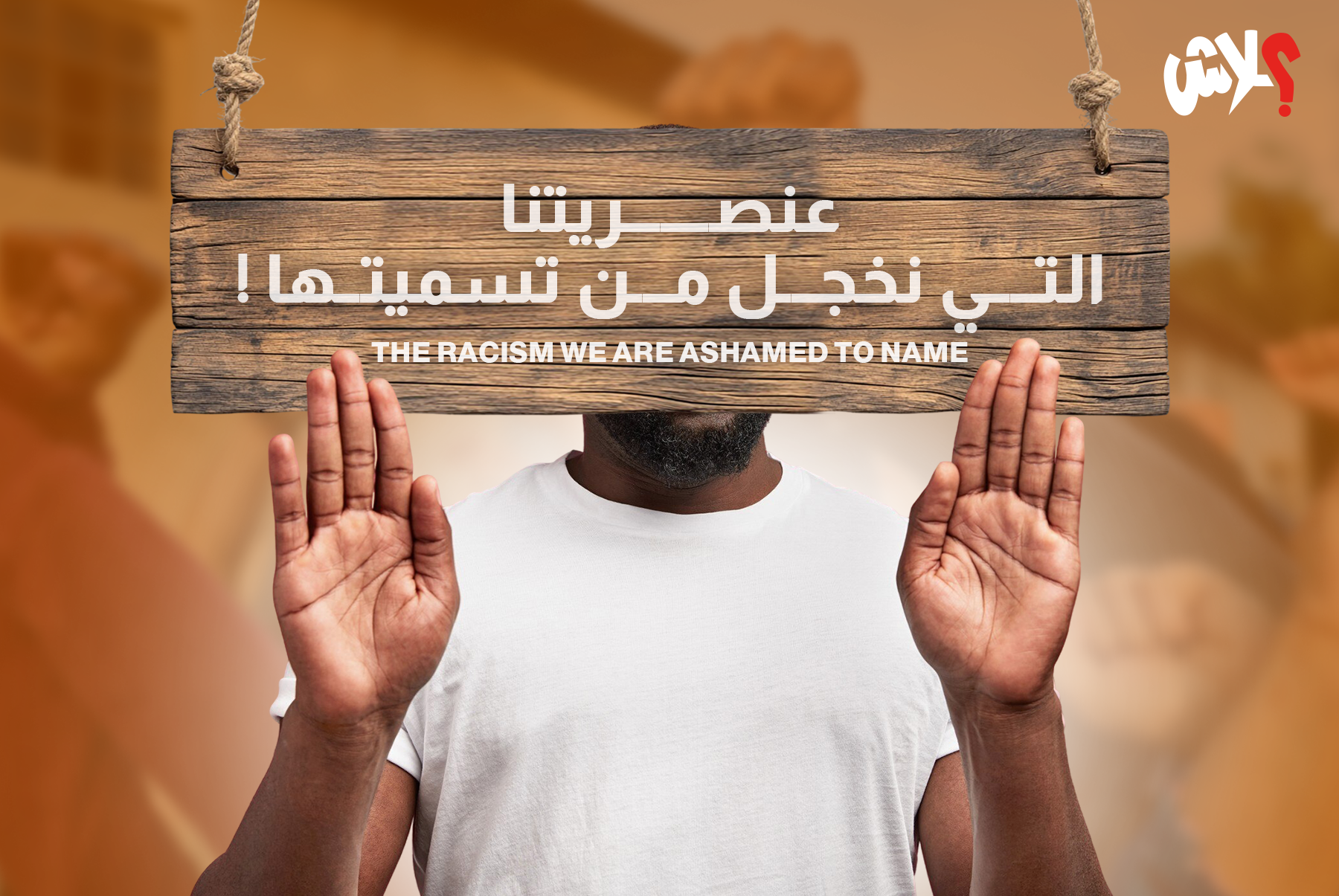
The Racism We Are Ashamed to Name!
The first step toward treating any illness is acknowledging that it exists. The first step toward solving any problem is admitting that it is there. This is a simple truth that children understand before adults do. Yet in Libya, such basic truths seem to collapse before our desperate need to cling to a false image of ourselves an image we wear like a mask to conceal our flaws, only to discover that those flaws continue to grow in the shadows until they become all that remains.
We are a kind people. That is what we keep telling ourselves whenever we see evidence suggesting otherwise. We are a people who do not discriminate. That is what we repeat whenever we are asked why some people are treated as though humanity has only one color, one nationality, and one tribe. Yet the kindness we boast about does not prevent teenagers from attacking migrants celebrating Eid in Martyrs' Square, and the chivalry we pride ourselves on does not prevent charging foreigners five times the entrance fee paid by Libyans at the zoo.
The problem is not that we are a racist society. The problem is that we refuse to admit it. And when we deny the existence of the disease, how can we ever hope to cure it?
A few days ago, my young son asked me: How will the ticket clerk at the zoo know whether a visitor is Libyan or foreign? I looked at him in surprise and asked: Why would he want to know? He replied: Because they charge different entrance fees ten dinars for an adult Libyan and five for a Libyan child, but fifty dinars for a foreign adult and twenty for a foreign child.
I paused for a moment. I did not know how to answer not because the question was difficult, but because the answer was disturbing. The uncomfortable truth that we rarely say aloud is that the employee cannot easily distinguish between a Libyan, Tunisian, Egyptian, or Palestinian, for example. They resemble us. They speak our language, or something close to it. Their skin color is not very different from ours. What the employee can identify immediately, however, are Black African migrants. They are the real targets of these fees not merely to collect additional revenue, but to discourage them from coming in the first place. For people working under the harshest conditions for the lowest wages, fifty dinars to enter a zoo is not simply an entrance fee; it is a barrier.
Nor is this an isolated decision. Many public recreational and cultural institutions including, most recently, the National Museum have adopted the same discriminatory approach, charging foreigners substantially higher admission fees. Yet we are talking about public institutions, owned by the state and funded by taxpayers, which ought to belong to everyone.
Museums, amusement parks, and zoos throughout the world generally do not ask visitors about their nationality at the ticket window. Yet the museum and zoo in Tripoli have apparently decided that the value of cultural and recreational enjoyment should vary according to the color of one's skin. If that is not racism, then what should we call it?
Even worse than discriminatory fees are the repeated assaults on migrants in our streets. During the recent Eid holiday, we witnessed what happened in Martyrs' Square and along the Tripoli Corniche. Migrants celebrating Eid happy, just like you and me went out simply to experience the joy of the holiday, only to find themselves attacked, insulted, robbed, and beaten by groups of teenagers. It was not self-defense. It was not a reaction to provocation. It happened simply because they were there—because their skin color was different and their language sounded unfamiliar to us.
These attacks are not new. They have happened repeatedly in different cities and at different times, without any serious intervention from the state to stop them, and without society speaking out against them with one united voice. Instead, we search for excuses. We say there are too many migrants. We say they compete with us. We say they create disorder. We look for any explanation except the obvious one that the problem is an ugly form of racism.
At the very same time, whenever we travel abroad, we become extremely sensitive to discrimination ourselves. We complain if we are treated as though we are somehow inferior. We reject being treated differently from others. We proudly declare that we are a people who refuse humiliation and reject discrimination. Yet in our own country, we practice it comfortably and justify it effortlessly.
The discrimination we experience in Libya may appear, on the surface, to be based on race and skin color. At its core, however, it is something else entirely: cheap populism and an empty sense of superiority. It is a feeling we invent for ourselves in order to justify treating others as though they are somehow beneath us.
We search for a sense of worth for something that elevates us above others. And when we fail to find individual achievements to take pride in, we resort to the easiest shortcut: superiority through nationality. I am Libyan; therefore, I am better. I belong to this country; therefore, I deserve more. This is not racism in its deepest ideological sense, but it is an everyday form of racism one practiced in parks, museums, and streets by children who learned it from their parents long before they encountered it in school.
This kind of discrimination is more dangerous than we imagine because it teaches people that their worth comes from belonging rather than effort, and that dignity is granted by nationality rather than earned through humanity. As long as we continue down this path, we will keep producing generations who feel superior without having accomplished anything deserving of that superiority.
The cure begins at home, in schools, and in mosques. It begins by teaching children that a person's value lies in their humanity not in their skin color or nationality. It begins by showing them that genuine distinction comes from individual achievement, moral character, and good conduct not from circumstances over which no one has any control, such as race, family, or country of birth.
We need to rebuild our collective consciousness. We need to admit that we practice discrimination, and that this discrimination is not a defense of our identity, as we like to claim, but rather a deficiency in our moral character. We need an official response and genuine action against these practices not merely Facebook posts or statements of condemnation from human rights organizations that are forgotten within hours.
The state must begin by ending discrimination within its own institutions. It cannot claim to oppose discrimination while simultaneously practicing it by imposing higher entrance fees on foreigners at its public parks and museums. Society, too, must break its silence. It must recognize that an assault on a migrant is an assault on a human being, and that discrimination based on skin color is no different from discrimination based on sex or nationality.
Discrimination will remain with us as long as we continue denying its existence. Ugly behavior will continue to flourish in broad daylight as long as we search for excuses instead of solutions. A kind people do not need to keep reminding themselves of their kindness they demonstrate it through their actions. A courageous people do not prove their courage by condemning injustice in other countries they prove it by confronting injustice within their own.
Admitting the disease is not shameful. The real shame is allowing it to consume us while we continue insisting that we are perfectly fine.