Arkno Oil: A Shadow Alliance Between the Rival Brothers
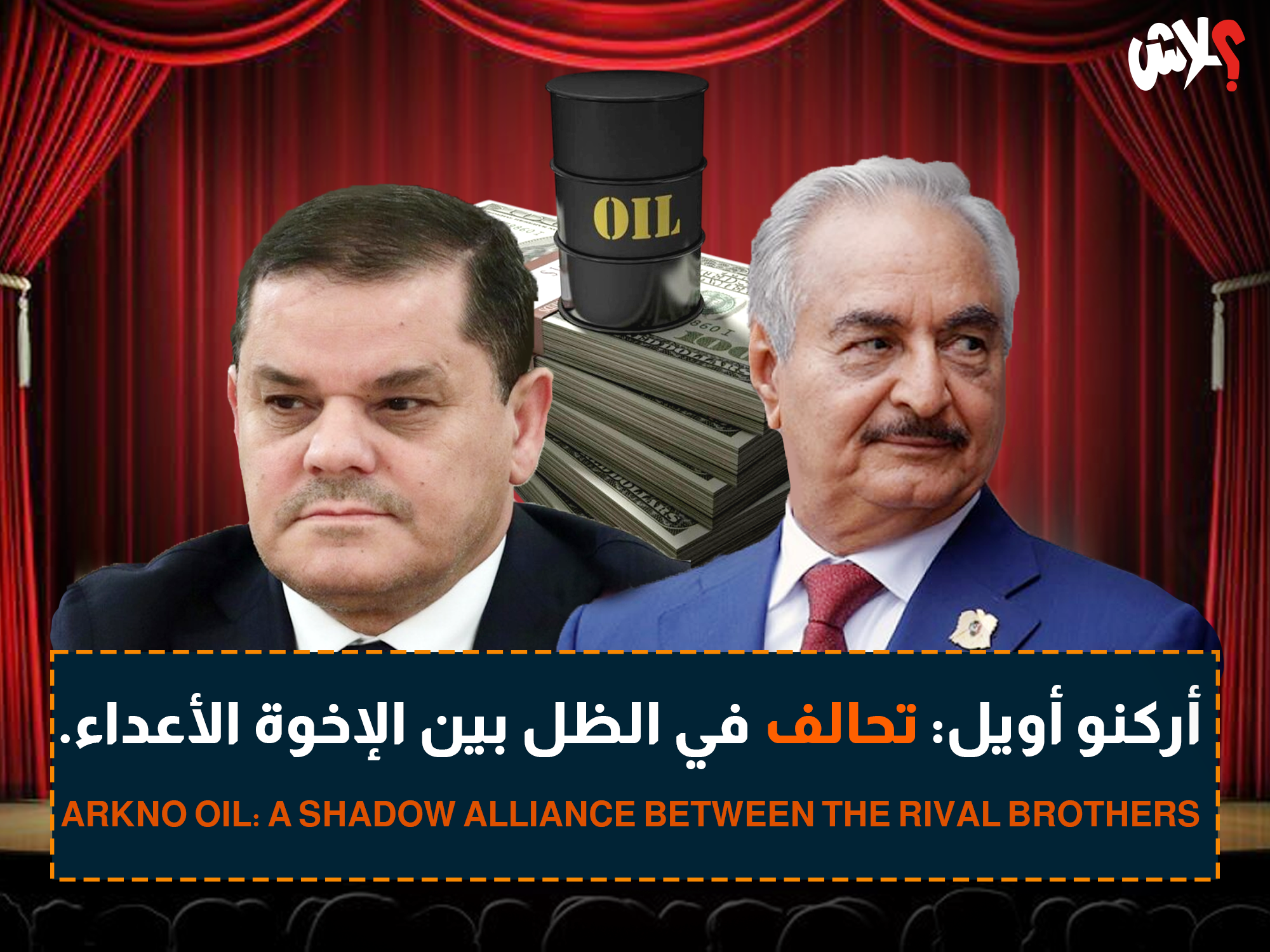
In the complex scene of Libyan politics, a strange phenomenon emergesworthy of study and attentionnamely the dual alliance between Haftar’s sons in the east and the Dbeibah family in the west through an oil company called “Arkano.”
Where they partner in secrecy and clash publicly.
In the tragic theater of Libyan reality, no sound rises above the sound of guns and oil.
And in the latest act, it appears that the strongest actors on the exhausted stage Khalifa Haftar and Abdulhamid Dbeibah have discovered that cooperation in the shadows is more profitable than fighting in the open, and their stage this time is the only source of this miserable nation’s sustenance: oil!
Arkano Oil, founded in Benghazi only two years ago, has rapidly transformed into a suspiciously fast-growing private oil giant, operating under dual protection military protection from the east and political/legal protection from the west.
So while the two families publicly quarrel over power, they secretly sit at one table to divide Libya’s oil pie through this company.
The oddity is not in the existence of a private oil company the market is a free world but in the mythical speed with which it acquired contracts, the ambiguity surrounding how those contracts were awarded, its large share of oil sales despite not contributing to production in any form, and stranger still is the sudden closure of the financial investigation opened by Libya’s Audit Bureau last May who closed this file, and why?
Despite fiery statements issued by the government in the west and decisions announcing investigations into the company’s operations and revenues and despite international reporting on Akano's suspicious activities its work continues strongly.
The oil project of (the rival brothers) is shielded by an impenetrable armor; even the Audit Bureau investigation didn’t last long.
And now Arkano is not only operating, but expanding, signing new contracts, partnering with global oil giants, and organizing energy conferences in Benghazi sponsored by the National Oil Corporation itself!
The irony lies in this official support from the NOC for a private company, while state institutions which are supposed to serve all Libyans collapse and go bankrupt.
This support resembles the appointment deal of Farhat Bengdara atop the corporation a bargain between east and west to secure joint control over wealth flows.
The ordinary Libyan citizen—who suffers from power cuts and the collapse of health and education is asked to believe that these two families who publicly accuse each other of corruption know nothing about a company whose board includes their allies in London.
He is asked to believe that those who cannot agree on an election law or a referendum date have magically agreed on granting oil privileges to a third party we are expected to believe is neutral and independent.
The story is bigger than an oil company that produces or sells crude
It is an advanced model of systemic corruption:
A proxy war on the surface, and a lucrative partnership behind curtains and underground.
On the tragic stage, the people are slaughtered and abused mere extras in their own play while behind the curtain, the stars of the show divide the proceeds of ticket sales.
They have turned the state into a battlefield of spoils, oil into a personal gambling chip Instead of being the backbone for schools, hospitals, and roads, it became a tool for militia funding, power reinforcement, and shady deals.
In the end, we remain asking the eternal question:
Who holds whom accountable?
Who holds the corrupt accountable?
Who punishes those who bend the nation’s wealth to their own interests under the pretext of political conflict?
Clearly, accountability will not come from within:
The hands meant to hold others accountable are themselves partners in everything happening.
The citizen is polarized toward one camp or another, compressing the homeland into a person, justifying his thefts, defending him, accusing rivals of treason and corruption while that same citizen, despite defending one of Arkan's partners, is still waiting for electricity, healthcare, and education, staring at a sky filled with smoke from oil sold in his name but without him.
This is the bitter truth the miserable man refuses to see:
Thieves fighting over how to divide the spoils while he harvests the ruin.