
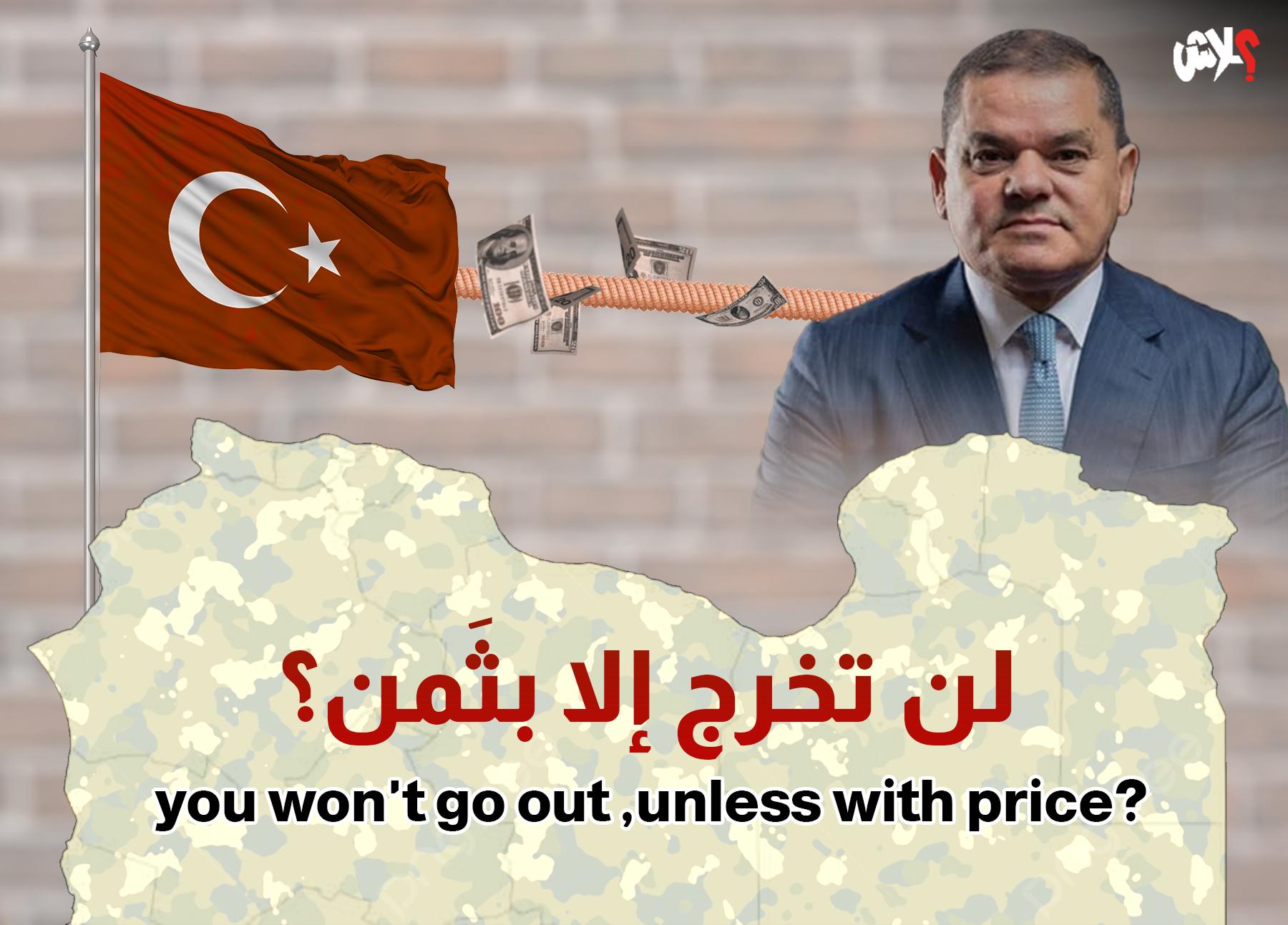
“Won’t Leave Without a Price?”
Historically, those in power have rarely concerned themselves with how they exit authority. In nearly all cases, they cling to it until their very last breath. This is what both our near and distant history tells us about the departure of ruling authorities in this land leaving behind piles of rubble and streams of blood. So why would the “Return to Life” government be an exception?
Especially when it has shown an extraordinary degree of flexibility in surviving challenges that nearly toppled it. Here, we are not discussing the government’s exit in a natural or logical sense; for if we applied logic, this government’s mandate should have ended four years ago either due to its failure to fulfill the core tasks it was chosen for (namely unifying institutions and holding elections), or because its two-year mandate has long expired.
But because we know Libya and how Libya prefers to be governed we turn to the most predictable scenario: war.
What puts this scenario on the table is the history of every government that has ruled Libya over the past twelve years indeed, over the past fifty. Even Baghdadi al-Mahmoudi’s government ultimately left through war.
So, what might this war look like?
While many believe that General Haftar is simply waiting for the right moment to launch an attack on western Libya pursuing his long-held ambition of full military control especially amid the recent Turkish-Haftar rapprochement, supporters of this view argue that such rapprochement aims to neutralize Turkey from any future military intervention, should Haftar decide to attack Tripoli again. The idea is to burden Ankara with deep, long-term economic interests in the east, binding it to the status quo.
Others, however, see this scenario as unlikely. Turkish investment in western Libya is strategic, and there is no direct incentive for Ankara to allow Haftar full control of the country. The current arrangement already serves them well: both east and west flock to Turkey every month seeking political favor, and Turkish interests are running smoothly on both sides. Why gamble on a risky alternative?
This is why some analysts argue that if a war does topple the government, it will not come from the east but from within the western region itself.
If this turns out to be true, what would such a conflict look like?
After the Central Bank of Libya’s report, many Libyans were stunned especially those who still see the “Return to Life” government as a path to stability. The dollar surged on the parallel market, prices soared across the board, and the specter of completely lifting subsidies feels closer than ever. This deterioration driven by the ongoing budget deficit may accelerate the eruption of simmering tensions between supporters and opponents of the government.
The scale of tension between armed groups in western Libya has become visible to all, as have the government’s efforts to portray itself as a force capable of military deterrence. This was evident in the military show of force carried out by the Joint Force in Misrata, which mobilized its armored vehicles toward the capital an unmistakable message. This is the same force the government heavily relies on to shield itself from any armed threat.
According to some observers, this force intends to send a clear message to all armed groups in Tripoli: no movement against the government will be tolerated. And they may succeed temporarily until a clear alternative emerges. The absence of a coherent narrative about who might replace the “Return to Life” government is delaying any internal confrontation inside the capital.
Once a serious proposal for a new government is put on the table, these observers believe the drums of war will truly begin to beat.
Historically, Tripoli’s armed groups have aligned themselves with whichever government enjoys international legitimacy from al-Sarraj, to al-Dbeibeh, and whoever comes next. This comes amid a complete absence of political influence from the population living within the geographical space known as Tripoli people who, unfortunately, are both the concerned party and part of the problem.
Thus, the narrative of the government’s exit remains tied to international dynamics surrounding Libya. Many believe these movements are clearer and more active than ever, as the international community increasingly doubts the Dbeibeh government’s ability to manage Libya’s conflict in a way that leads to stability. This makes the decision to remove it from the scene closer than at any previous stage.
Until that moment arrives, dear citizen, try to stay away from public squares—from Sikka Road and Shatt Road. Fill your chest with patience, remain neutral, and write on your Facebook page: “Hasbi Allah wa ni‘ma al-wakil” (God is sufficient for me, and He is the best disposer of affairs).
Then… try to sleep.